Best Vietnamese Phrases to Impress Locals (Funny, Natural, and Easy)
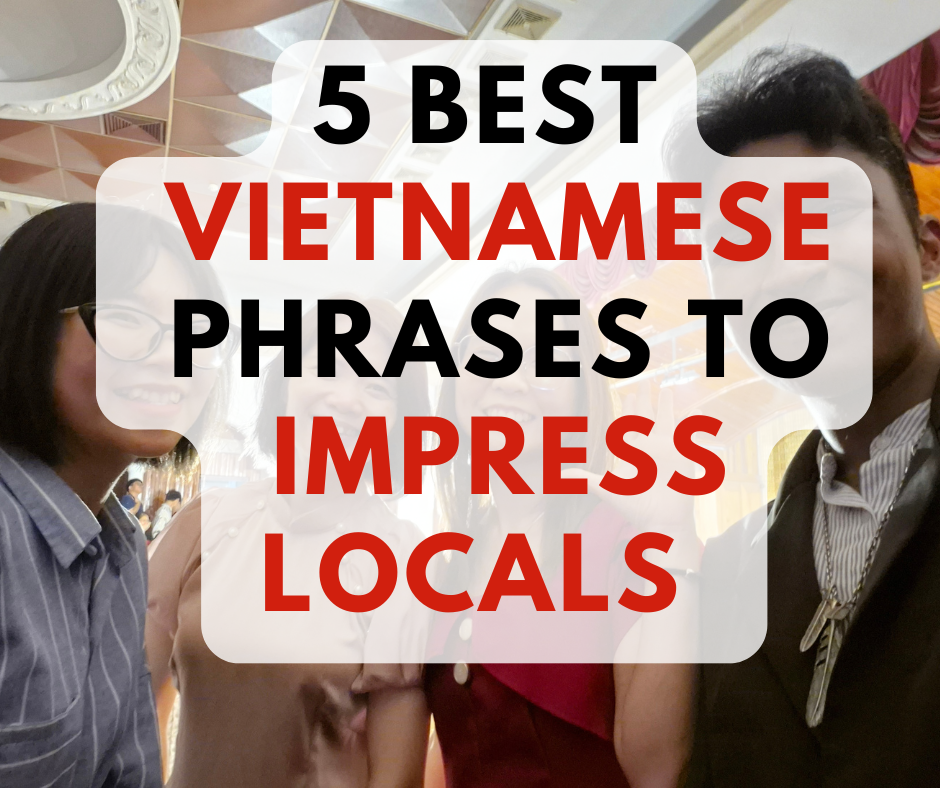
If you want Vietnamese people to smile instantly, you don’t need long sentences. You need the right expressions, the ones locals actually say in daily life. In this post, you’ll learn 5 super-common Vietnamese phrases that can make you sound more natural (and way more fun)
1) “Ối giời ơi!” - “Oh my God!” (Vietnamese-style)
Meaning: A strong reaction: surprise, shock, annoyance, or “I can’t believe it!”
Vibe: Very Vietnamese, very expressive, very common.
When locals say it:
- You tell them a crazy story
- Something unexpected happens
- You make a silly mistake (and laugh about it)
Examples: Ối giời ơi, đắt thế!
= Oh my God, that’s so expensive!
Tip (to sound natural):
Stretch it a little: “Ốiiii giời ơiiii!” (more dramatic = more funny)
2) “Không say không về!” - “If you’re not drunk, you’re not going home!"
Meaning: A playful drinking slogan.
Vibe: Party / karaoke / group dinner energy.
Use it when:
- Friends are cheering drinks
- People are joking about drinking a lot
Examples:
Hôm nay không say không về nhé!
= Today, we’re not going home until we’re drunk!
Important note:
This is fun only in the right context (friendly social settings). If you don’t drink, you can smile and say:
Em uống ít thôi nhé. = I’ll drink just a little.
3) “Anh đẹp trai / Em xinh gái / Người đẹp” - Easy compliments that locals love
Vietnamese people use quick compliments a lot — especially in casual conversation.
A) Anh đẹp trai! (to a man) = You’re handsome!
B) Em xinh gái! (to a woman) = You’re pretty!
C) Người đẹp! (playful / friendly) = Beautiful person! (like “hey, beauty!”)
Examples:
Anh đẹp trai, Anh đi đâu thế? = Hey Handsome! Where are you going?
Em xinh gái đi uống cà phê với anh không? Pretty girl, Do you want to drink coffee with me?
Người đẹp ơi, cho mình hỏi cái này với! = Hey beauty, can I ask you something?
Safety tip (very important):
Use these with people you already know, or in light, friendly situations.
4) “Chém gió” - “Talk big / exaggerate / joke around”
Meaning: Saying funny, exaggerated, sometimes unrealistic things — often for entertainment.
Closest English: “You’re bluffing,” “You’re bullsh*tting” (but Vietnamese is often more playful).
Examples:
- Ông lại chém gió rồi! = You’re exaggerating again!
- Tôi chỉ chém gió thôi. = I’m just joking / just talking big.
Common social use:
- Friends teasing each other
- Light “don’t lie to me” moments (not too serious)
5) “Bó tay” — “I give up / I can’t deal with this”
Meaning: You feel helpless, speechless, or amused by something ridiculous.
Vibe: Funny frustration.
Examples:
- Bó tay luôn! = I can’t even… / I give up!
- Thôi bó tay, chịu rồi. = Okay I give up, I can’t handle it.
Extra-natural combo:
Bó tay chấm com. (super slang, very internet-y) = “I give up dot com.” (pure meme energy)
Mini practice: 10-second “impress locals” script
Try saying this with a smile:
- Ối giời ơi! Hôm nay đông thế! Người đẹp ơi, cho mình hỏi cái này với.
(Friend says something crazy)
- Ôi ông chém gió! Bó tay luôn!
Locals usually laugh because it sounds so Vietnamese.
Common mistakes to avoid (so you don’t sound weird)
Don’t use Không say không về in formal settings (office meetings, elders, serious dinners).
Don’t call strangers Người đẹp too strongly/seriously - keep it light and friendly.
Chém gió and bó tay are slang: great with friends, not for official situations.
Where to Learn in Hanoi
If you’re looking for a structured collection of essential everyday expressions, explore our complete Survival Vietnamese Guide where we break down practical phrases for expats and travelers in Vietnam.
iSpeak Vietlingo - Practical Survival Vietnamese for Travelers
The course is short, fun, and gives you the exact Vietnamese you need for real-life travel situations.
Check out: https://ispeakvietlingo.com/courses/survival-vietnamese-for-travelers-2/
You should also read:

Best Way to Learn Vietnamese for Expats in Vietnam (Especially in Hanoi)
Are you an expat living in Hanoi or another Vietnamese city and wondering how to learn Vietnamese effectively without wasting time or getting overwhelmed? You’re not alone. Many expats struggle to find a method that fits their busy lifestyle, language background, and cultural goals. At…
Continue reading...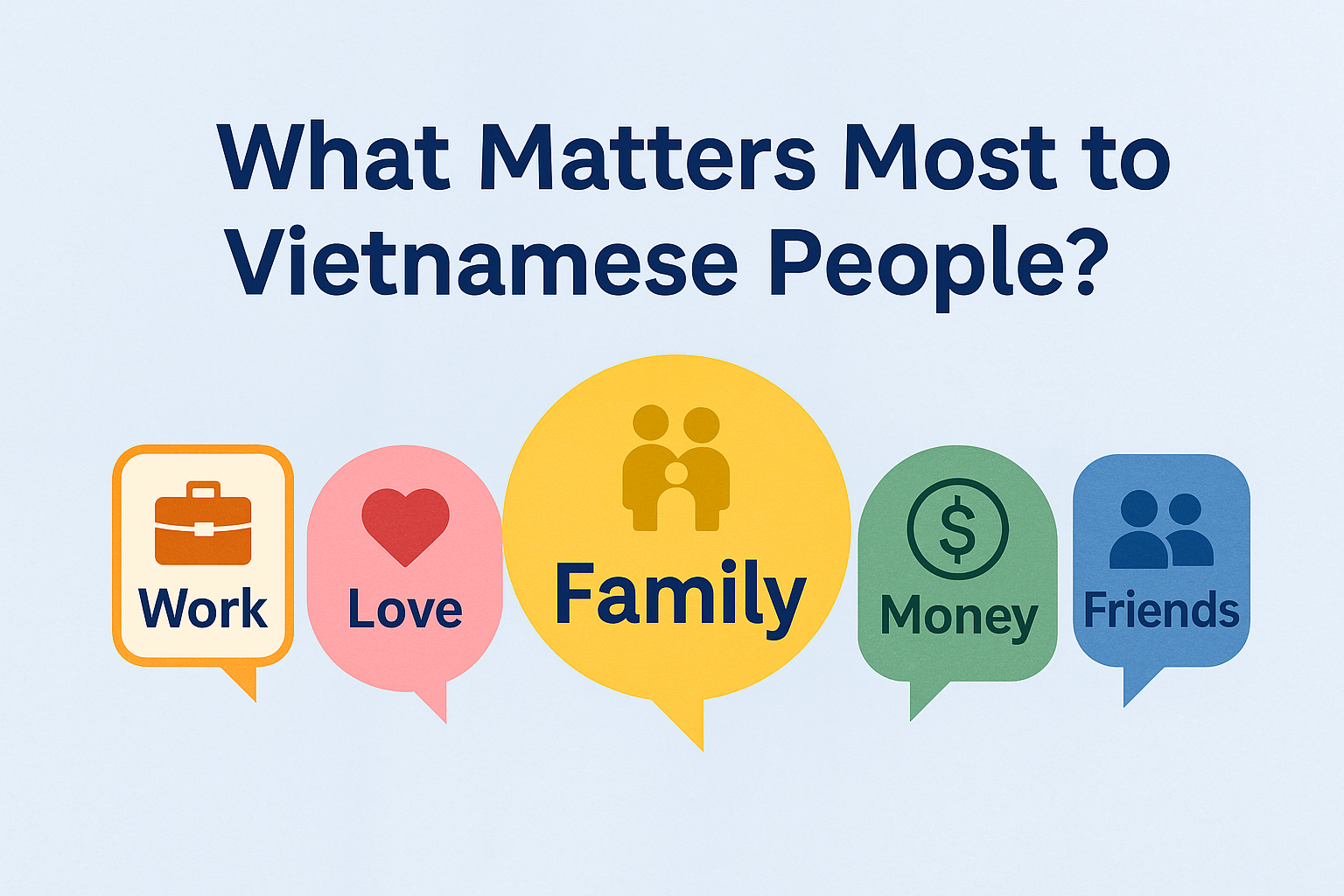
What Matters Most to Vietnamese People? Work, Love, Family, Money, or Friends? (And why it matters if you live or do business in Vietnam)
If you're living, working, or doing business in Vietnam, this question can unlock powerful insights: What do Vietnamese people value the most in life? In many countries, work is the top priority. But in Vietnam, while people work hard, sometimes even holding multiple jobs, they…
Continue reading...
5 Common Mistakes Foreigners Make When Learning Vietnamese (And How to Avoid Them)
Learning Vietnamese can be an exciting yet challenging journey, especially for foreigners who are new to tonal languages or Southeast Asian cultures. At iSpeak Vietlingo, we’ve worked with hundreds of learners from around the world and we’ve noticed that many of them make the same…
Continue reading...Start Your Vietnamese Journey Today
Get your copy of 'Vietnamese with Ease' and begin mastering the Vietnamese language with confidence and cultural insight.
Order Your Copy Now